
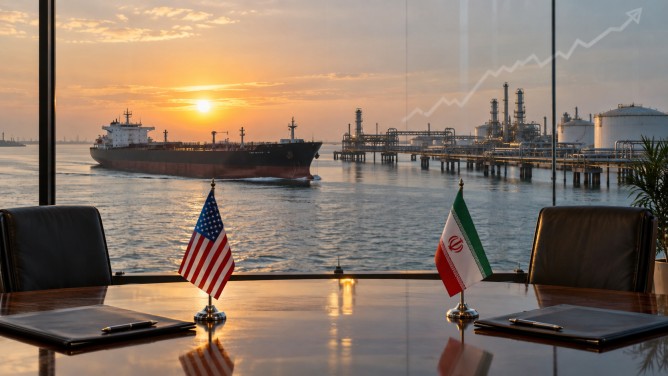
The recent uptick in oil prices is set to impact global markets, as Brent crude futures for November rose 1.7% to approximately $102 a barrel, while US West Texas Intermediate (WTI) crude for October also saw a 1.7% increase, reaching nearly $97 a barrel. This development breaks a four-day streak of declining prices and comes as the world anticipates potential diplomatic discussions between the United States and Iran.
Investors are closely monitoring the possibility of talks between US President Donald Trump and Iranian President Masoud Pezeshkian at the United Nations General Assembly in New York. Such diplomatic engagement could influence international oil dynamics, given Iran’s significant role in the global oil supply chain. The anticipation of these discussions is a key factor driving the recent surge in oil prices.
Further influencing the oil market is the ongoing tension in the Middle East, notably affecting supply routes like the Strait of Hormuz. Despite these challenges, Saudi Arabia has managed to increase crude exports through this critical passage, easing some concerns about the global supply. However, the situation remains volatile due to continued attacks by Yemen’s Iran-aligned Houthi group, which have heightened regional uncertainties.
In addition to Middle Eastern dynamics, Libya’s oil production faced a setback as an armed group reportedly shut a valve on the Sharara crude pipeline. This action has reduced output by around 200,000 barrels per day, adding to the global supply concerns. The disruption in Libya further underscores the fragility of international oil markets amid geopolitical tensions.
China’s involvement, urging Iran to mitigate Houthi attacks, highlights the broader geopolitical interest in stabilizing the region. As these developments unfold, market participants remain attuned to the potential outcomes of US-Iran engagements at the UN, recognizing their potential to reshape the global oil landscape significantly.