
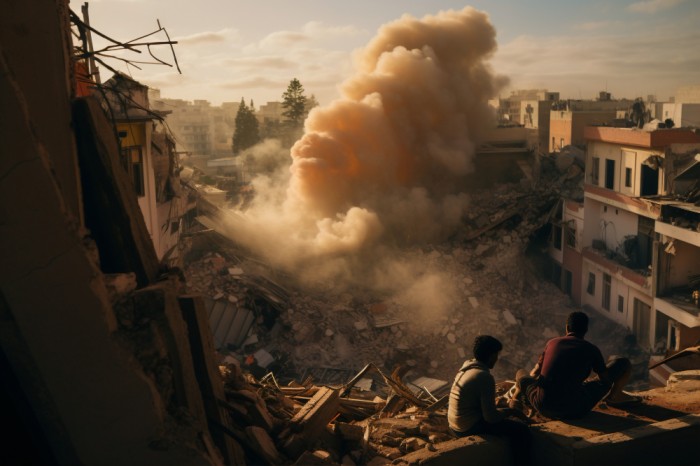
The ongoing tensions between the United States and Iran have escalated significantly following a series of reciprocal attacks, heightening fears of a broader conflict in the Gulf region. The United States military announced that it had conducted strikes targeting Iranian assets, such as air defense systems, drone facilities, and surveillance structures, as a reaction to an assault on a commercial vessel in the Strait of Hormuz. U.S. officials stated that these actions were necessary to mitigate Iranian threats in this strategically vital maritime corridor.
In response, Iran’s Islamic Revolutionary Guard Corps declared it had launched missile and drone assaults on U.S.-linked military sites in Kuwait and Bahrain. Iran reported that multiple targets, including a U.S. air base in Kuwait and a naval facility in Bahrain, were struck, although these claims have not been independently verified. In light of the attacks, Kuwait and Bahrain elevated security alerts, deploying defense systems and advising residents to seek shelter in safe areas, as the exchange of strikes threatens the fragile ceasefire between Washington and Tehran.
The recent hostilities are the latest in a series of confrontations following earlier U.S. strikes on Iranian military installations, exacerbating the already tense situation in the Strait of Hormuz. This strategic waterway is crucial for global energy shipments and remains a focal point of U.S.-Iranian disputes. The escalating military exchanges have raised alarms over the potential collapse of the current ceasefire agreement between the two nations.
U.S. President Donald Trump accused Iran of breaching the ceasefire agreement, cautioning that additional military actions could be forthcoming if tensions persist. Conversely, Iran has attributed the escalation to Washington, accusing the U.S. of initiating provocations and violating existing agreements. The situation remains fluid, with both sides exchanging blame and warnings, exacerbating international concerns about regional stability.